New PZH-Plus Long Stroke Gripper
When components of different sizes have to be handled alternately, conventional centric grippers quickly reach their limits. In order to cover the whole spectrum of components, gripper fingers or complete grippers have to be exchanged over and over again.
When components of different sizes have to be handled alternately, conventional centric grippers quickly reach their limits. In order to cover the whole spectrum of components, gripper fingers or complete grippers have to be exchanged over and over again.
SCHUNK offers a highly efficient alternative: the innovative Long Stroke Gripper PZH-plus. Its patented multi-tooth guidance and its housing made of high strength aluminum assure a very compact performance. Compared to similar grippers, the PZH-plus provides a 2x higher gripping force.
Optionally, the PZH-plus can be reliably monitored via magnetic field sensors or inductive sensors. The large center bore allows the installation of a camera, a feed-through of material, or the gripping of very long workpieces.
The Long Stroke Centric Gripper comes in four sizes. At a weight between 1.6 and 33 kg, the maximum stroke per finger amounts between 20 and 75 mm, and the gripping forces between 250 and 3.800 N. The gripper is suitable for I.D. and O.D. gripping of workpieces weighing up to 19.3 kg.
About SCHUNK:
SCHUNK is the worldwide competence leader for clamping technology and gripping systems. Totaling more than 60 years of experience, SCHUNK is a family owned operation and a global player in one. For more information, visit www.schunk.com
Featured Product
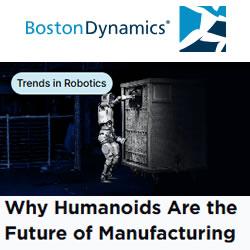
Boston Dynamics Webinar - Why Humanoids Are the Future of Manufacturing
Join us November 18th for this Webinar as we reflect on what we've learned by observing factory floors, and why we've grown convinced that chasing generalization in manipulation—both in hardware and behavior—isn't just interesting, but necessary. We'll discuss AI research threads we're exploring at Boston Dynamics to push this mission forward, and highlight opportunities our field should collectively invest more in to turn the humanoid vision, and the reinvention of manufacturing, into a practical, economically viable product.