Join the New LinkedIn Group 'Motion Control Fundamentals'
Created by Electromate.com, this New LinkedIn Technical Group strives to advance the knowledge of the fundamentals of Electro-mechanical Motion Control.
Created by Electromate.com, this New LinkedIn Technical Group strives to advance the knowledge of the fundamentals of Electro-mechanical Motion Control.
We welcome regular posts by group members of any Technical Notes & White Papers, Video's, Webinars, Podcasts, Engineering Formulae, Sizing Software, etc., related to the discipline of Motion Control.
We appreciate your participation and encourage your comments.
If you are novice or technically proficient user of Motion Control products/systems, please join this group. No Job Postings please.
Click on the link below to join now.
http://www.linkedin.com/groups/Motion-Control-Fundamentals-4883684/about
A copy of this Press Release can be viewed at-
http://electromate.wordpress.com/2013/03/04/join-the-new-linkedin-group-motion-control-fundamentals/
For more information, please contact:
EDITORIAL CONTACT:
Warren Osak
sales@electromate.com
Toll Free Phone: 877-737-8698
Toll Free Fax: 877-737-8699
www.electromate.com
Tags: Motion Control, Motor Control, Machine Control, Mechatronics, High-Tech Systems, Robotics, Automation, Servo Systems, Stepper Systems, Linear Motion, Rotary Motion, Technology, Mechanical Motion Control, Technology, Engineering Formulae, Motion Control Products
Featured Product
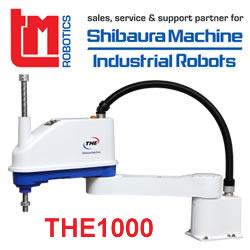
TM Robotics - Shibaura Machine THE SCARA range
The THE range from Shibaura Machine is an extensive line up of SCARA robots. Available in four arm lengths THE400 (400mm), THE600 (600mm) and the most recent THE800 (800mm) and THE1000 (1000mm), this range is suitable for assembly, handling, inspection and pick and place processes in varied industrial applications. The THE1000 boasts a 20kg payload capacity and an impressive 0.44 second cycle time, providing high speeds for processes with large components. In fact, the range has been recognised for as the price-to-performance leader compared to other SCARA models in its price range due to its impressive speed versus payload capacity.