New ATEX and UL Class I, Div. 2 Hazardous Location Certified HMI Solutions from Exor
The eTOP Series 500 Glass HMI is the ideal choice for Oil and Gas applications and installation in harsh environments. IP69K - extended temperature range (-20°C +60°C), ATEX, UL and DNV approvals.
The eTOP Series 500 Glass HMI is the ideal choice for Oil and Gas applications and installation in harsh environments. IP69K - extended temperature range (-20°C +60°C), ATEX, UL and DNV approvals.
Series 500 Glass HMI is the ideal solution for harsh environments and for extreme, outdoor, marine, automotive applications. Features include:
•Capacitive Touchscreen
•Available in different sizes: 7" and 15"
•Solutions high performance
•Brilliant displays with LED technology all in full color
•Resistant to UV rays
•High brightness. Readable even in sunlight
•Gateway function, remote installation of application and remote assistance
•Ethernet, USB, serial ports and MPI integrated
•Optional plug-in modules for fieldbus systems and networks
•Support SD Card
•PLC (CODESYS) Optional integrated
•Protection class IP69K
•DNV
•ATEX
•UL Class I. Div 2 Haz. Loc
•Extended temperature range (-20 ° C +60 ° C)
Click on the link below to view the specification on Exor's ATEX and UL Class I, Div. 2 Hazardous Location Certified HMI Solutions-
https://www.servo2go.com/search.php?search=Marine and Harsh Environment Series&D=PROD
For more information, please contact:
EDITORIAL CONTACT:
Warren Osak
sales@servo2go.com
Toll Free Phone: 877-378-0240
Toll Free Fax: 877-378-0249
www.servo2go.com
Tags: Exor, ATEX, Hazardous Location, UL Class I. Div 2, HMI, Operator Interface, IP69K
Featured Product
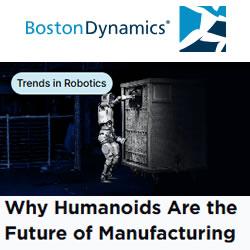
Boston Dynamics Webinar - Why Humanoids Are the Future of Manufacturing
Join us November 18th for this Webinar as we reflect on what we've learned by observing factory floors, and why we've grown convinced that chasing generalization in manipulation—both in hardware and behavior—isn't just interesting, but necessary. We'll discuss AI research threads we're exploring at Boston Dynamics to push this mission forward, and highlight opportunities our field should collectively invest more in to turn the humanoid vision, and the reinvention of manufacturing, into a practical, economically viable product.