Valqari Introduces the Drone Delivery Station

Six-storage delivery solution showcases the start-up's continued leadership in last inch drone delivery logistics

The Internet of Robotic Things: How IoT and Robotics are Evolving to Benefit the Supply Chain

The Internet of Robotic Things (IoRT) is a rapidly evolving technology. In just a few decades, industrial robots have become commonplace in factory settings across the world, and they only continue to gain popularity for their productivity and profitability.

Standardized Robot Programming - From Lean Entry to Complex Applications

With solutions that enable intuitive and harmonized programming of robots from a wide range of manufacturers using pre-developed programming templates, effort and costs are reduced considerably. This makes their use attractive for more and more companies.

New Robotic Grippers Transforming the Food Sector

While traditional robotics systems have successfully served the food sector for many years in palletizing (and some packaging) applications, it is only in recent years that it has become possible for robots to handle delicate food items directly.

The Lab of the Future: How New Tech Like Robotics Balances with COVID Realities

What will the laboratory of the future look like, especially when dealing with post-COVID realities? Given the current situation of working during a pandemic, we really do need to be innovative in our how we design labs today for use tomorrow.

Grasping Static Electricity for Revolutionary Robotics

Imagine if you could harness the same static cling to handle a material as fragile as an egg, as flimsy as soft fabric - or to assemble the uppers of Nike trainers at 20 times the pace of a human worker.

Software - The Next Generation of Vehicle Architecture

The role of automotive software has changed profoundly in recent years. Software is now being used and is relied upon for critical operations that were previously being performed by hardware.

Energy Saving in Die Casting Automation

Die casting, the process of forcing molten metal into molds, is far from new. Today, casting processes use a lot more advanced technology, specifically robots, than in years past. These 'bots have many advantages in die casting, but energy saving is one of the most substantial.

Robotic House Construction-Sekisui Heim's Pursuit in Combating a Housing Industry Labor Shortage

The way the production line is set up is said to be inspired by car factories. The industrial robots from Kawasaki are utilized on the unit assembly line, working on gable frame assembly, and overall assembly to connect the ceiling, floor and gable frames.

Autonomous Mobile Robot (AMR) Conveyors for Small Loads & Applications

When your clients are working with you to integrate lightweight autonomous mobile robots (AMRs), they're looking for the biggest bang for their buck.

Robot Sensor Market is set to surpass USD 4 billion by 2026

A vast majority of manufacturers are integrating robotic systems in production facilities to enhance production capacity, boost profit margins, and cut operational costs. These trends have created a substantial demand for robotic components, including robot sensors like 3D vision.

Courts Rule AI Cannot Hold Patent.

The applications to patent an interlocking food container easily grasped by robots and another for "devices and methods for attracting enhanced attention" were filed by the Artificial Inventor Project, naming DABUS as the inventor.

Robots Automate Machine Tools

To increase productivity in production, more and more companies are deciding to link and automate their machine tools. The right automation system is crucial here. Robots and the appropriate gripping technology play an important role here.

The Drive for Reliable Data: Using Real-World Inputs to Test MicroStrain Inertial Sensors

Inertial measurement units (IMUs) are essential tools for manufacturers of off-road heavy-duty vehicles and machinery. They provide critical information that is used to control, monitor and manage the equipment, but also to ensure operator safety during use.

The Colossus Robot on the Front Line Against Covid-19

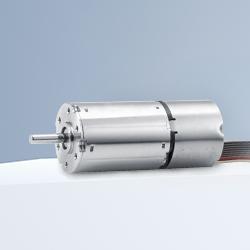
These remote control and highly modular autonomous robots are proving to be valuable assets in the fight against Covid-19. Fitted with maxon motors, these versatile robots are also capable of supporting the unit in large-scale incidents. A report on an heroic collaboration.

Records 1261 to 1275 of 3726

First | Previous | Next | Last

Featured Product
IP Seals for Robots

IP Seals for Robots

Freudenberg Sealing Technologies' IPRS (Ingress Protection Seals for Robots) provides reliable protection for robotic systems operating in harsh environments. Designed to prevent dust, moisture, chemicals, and wear from compromising performance, IPRS extends service life and reduces maintenance. The adaptive Z-shaped geometry ensures sealing integrity under continuous motion, making it ideal for high-speed automation and outdoor applications. Manufactured with high-performance elastomers such as Fluoroprene XP and EPDM, IPRS offers exceptional resistance to lubricants, cleaning agents, and extreme temperatures. This makes it the perfect solution for six-axis robots, SCARA robots, AMRs, AGVs, and cobots. With its low-friction design and durable materials, IPRS enhances energy efficiency and operational reliability in industrial and autonomous robotics. Learn more about our IPRS Seals

Robotics and Automation - Featured Company

Palladyne AI Corp.

Palladyne AI Corp.

Welcome to Palladyne AI, where we unleash the power of robotics with our revolutionary AI software platform for the physical world. In a world where robots are progressing toward human-like adaptability, seamlessly navigating dynamic environments and conquering complex tasks with unparalleled efficiency, Palladyne AI stands as the beacon of innovation toward that future reality. Through our cutting-edge artificial intelligence (AI) software platform, we are redefining the boundaries of robotics. Our goal is simple: Help companies with autonomy in their robotics operations by addressing key challenges of traditional robotic deployments.