The Tiny Radar Chip Revolutionizing Gesture Recognition: Google ATAP's Project Soli
From All About Circuits: Google ATAP is bringing touchless interfaces to the market using a miniaturized radar chip no bigger than a dime. This is Project Soli.
Soli’s radar sensor is a marvel in many respects. For one thing, it solves a long-lived issue when it comes to gesture-recognition technology. Previous forays into the topic yielded almost-answers such as stereo cameras (which have difficulty understanding the overlap of fingers, e.g.) and capacitive touch sensing(which struggles to interpret motion in a 3D context).
Google ATAP’s answer is radar.
Radar is capable of interpreting objects’ position and motion even through other objects, making it perfect for developing a sensor that can be embedded in different kinds of devices like smartphones... (full article)
Records 1 to 1 of 1
Featured Product
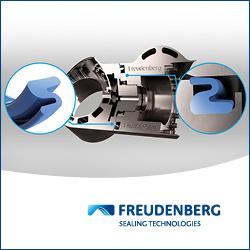
IP Seals for Robots
Freudenberg Sealing Technologies' IPRS (Ingress Protection Seals for Robots) provides reliable protection for robotic systems operating in harsh environments. Designed to prevent dust, moisture, chemicals, and wear from compromising performance, IPRS extends service life and reduces maintenance. The adaptive Z-shaped geometry ensures sealing integrity under continuous motion, making it ideal for high-speed automation and outdoor applications. Manufactured with high-performance elastomers such as Fluoroprene XP and EPDM, IPRS offers exceptional resistance to lubricants, cleaning agents, and extreme temperatures. This makes it the perfect solution for six-axis robots, SCARA robots, AMRs, AGVs, and cobots.
With its low-friction design and durable materials, IPRS enhances energy efficiency and operational reliability in industrial and autonomous robotics. Learn more about our IPRS Seals
Robotics and Automation - Featured Company

OnLogic
A global industrial PC manufacturer and solution provider focused on hardware for the IoT edge, OnLogic designs highly-configurable computers engineered for reliability. Their systems operate in the harshest environments and power innovation in the evolving Internet of Things. Founded in 2003 as Logic Supply, the company has served more than 70,000 customers. OnLogic has offices in the US, Netherlands, Taiwan and Malaysia.